
Terra Climatic delivers complete turnkey bio-refinery projects that convert agricultural residue into Bio-bitumen, Bio-oil, Wood Vinegar and Biochar using advanced pyrolysis technology.
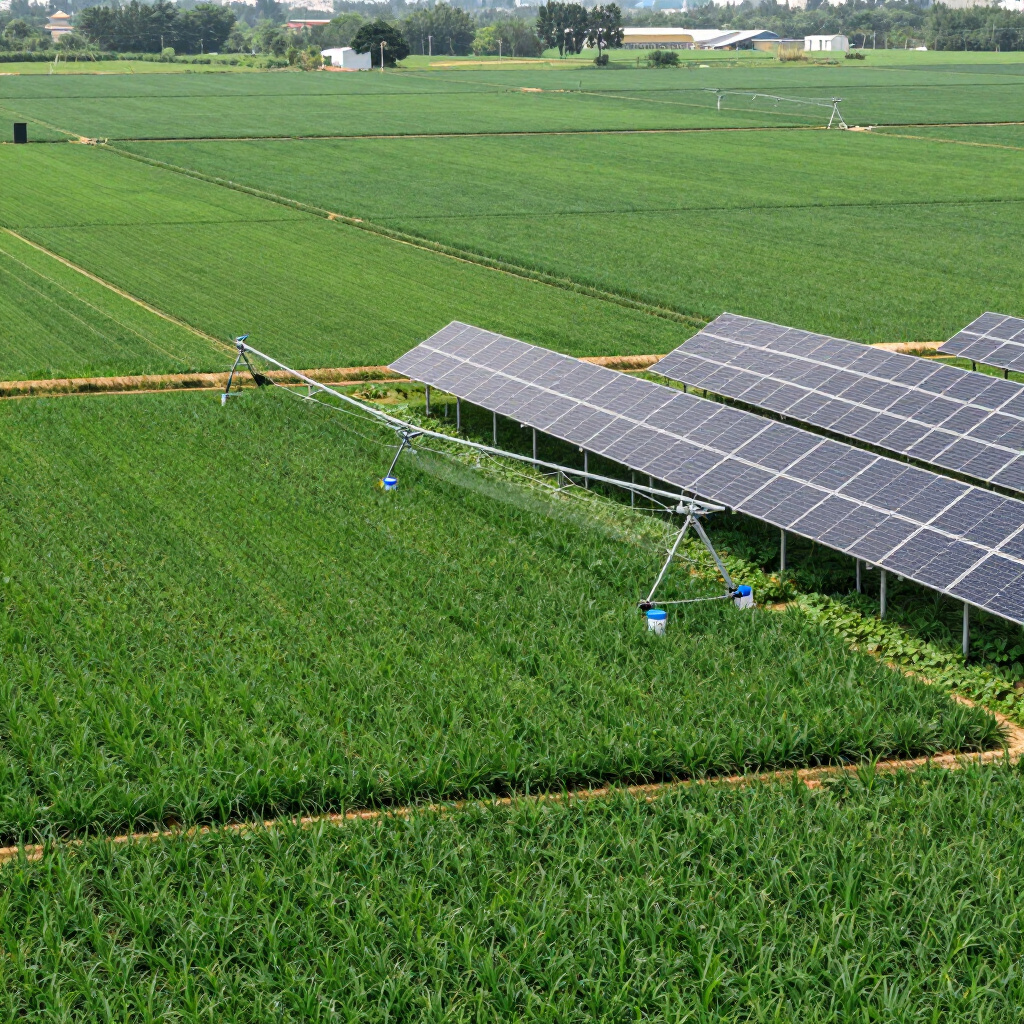
Terra establishes modular bio-bitumen plants close to where crop residues are generated, creating localized waste-to-wealth ecosystems.
By heating agricultural residue to 400–600°C in the complete absence of oxygen, we extract volatile gases and condense them into high-value bio-oil and pyroligneous acid (wood vinegar), while leaving behind carbon-dense biochar.
Collaborating with local farmers to collect straw and stalks, putting money directly into rural economies.
High-efficiency thermochemical conversion yielding bio-oil, biochar, wood vinegar, and process heat.
Upgrading raw bio-oil fraction into a premium, road-grade bio-binder matching petroleum bitumen specs.
Registering carbon removal via our digital MRV system, unlocking high-integrity offset revenues.
"Decentralized refining turns agricultural liability into localized infrastructure assets."
India's massive road infrastructure expansion is critically exposed to petroleum shortages, Middle East geopolitical turbulence, and volatile import logistics.
With nearly half of the nation's bitumen requirements imported, price fluctuations and refining shifts directly disrupt municipal road building and NHAI highway schedules.
Simultaneously, millions of tonnes of agricultural crop residues are burnt in fields every winter, creating extreme environmental pollution and wasting valuable energy assets.
See Our SolutionNearly half of India's national bitumen demand is met through foreign imports.
Annual foreign exchange outflow to import petroleum by-products from volatile markets.
Consistently rising demand driven by nationwide infrastructure development.
Domestic refineries upgrade heavy residue into higher-value fuels, tightening bitumen supply.
Converting local crop residues into durable asphalt binders. We substitute volatile imports, build domestic supply security, and return value straight to rural farming communities.
We purchase crop straw directly from local farmers. Rather than burning fields, they get a new, reliable source of secondary income.
Replacing fossil petroleum bitumen with agricultural residue binders results in up to 70% greenhouse gas reductions across the lifecycle.
Decentralized biorefineries insulate local contractors and governments from Middle East geopolitical crises and tariff risks.
CSIR-CRRI validated bio-bitumen asphalt modifiers improve flexibility, temperature resistance, and reduce thermal cracking.
Drives positive rural cashflow by establishing active residue aggregation networks in proximity to agrarian hubs.
Keeps capital in the local region. Farmers grow food, residues construct local roads, and biochar restores soil ecosystems.
Follow the flow of carbon: from agricultural residue in the field to long-term sequestration in national roadways and farm soils.
Agricultural waste like paddy straw collected post-harvest.
Aggregated and transported to local biorefineries.
Biomass processed at 400-600°C in oxygen-free environment.
Condensing pyrolysis vapours into high calorific energy liquid.
Upgraded and refined fraction ready for road binder applications.
Blended at hot-mix plant to construct flexible roadways.
Pyrolysis generates zero waste. Our closed-loop engineering yields separate high-value co-products in parallel.
Stable, highly porous carbon applied to farm soils to improve moisture retention and lock carbon for centuries.
Pyroligneous acid condensed to produce biological crop stimulants, boosting organic farming yields naturally.
Digital MRV registers real-time production to generate verified carbon dioxide removal credits (dCORs).
High-grade renewable products processed locally from agricultural residue feedstock, serving both soil health and infrastructure needs.
Premium asphalt modifier and road binder processed from biomass oil, replacing fossil-based bitumen binders.
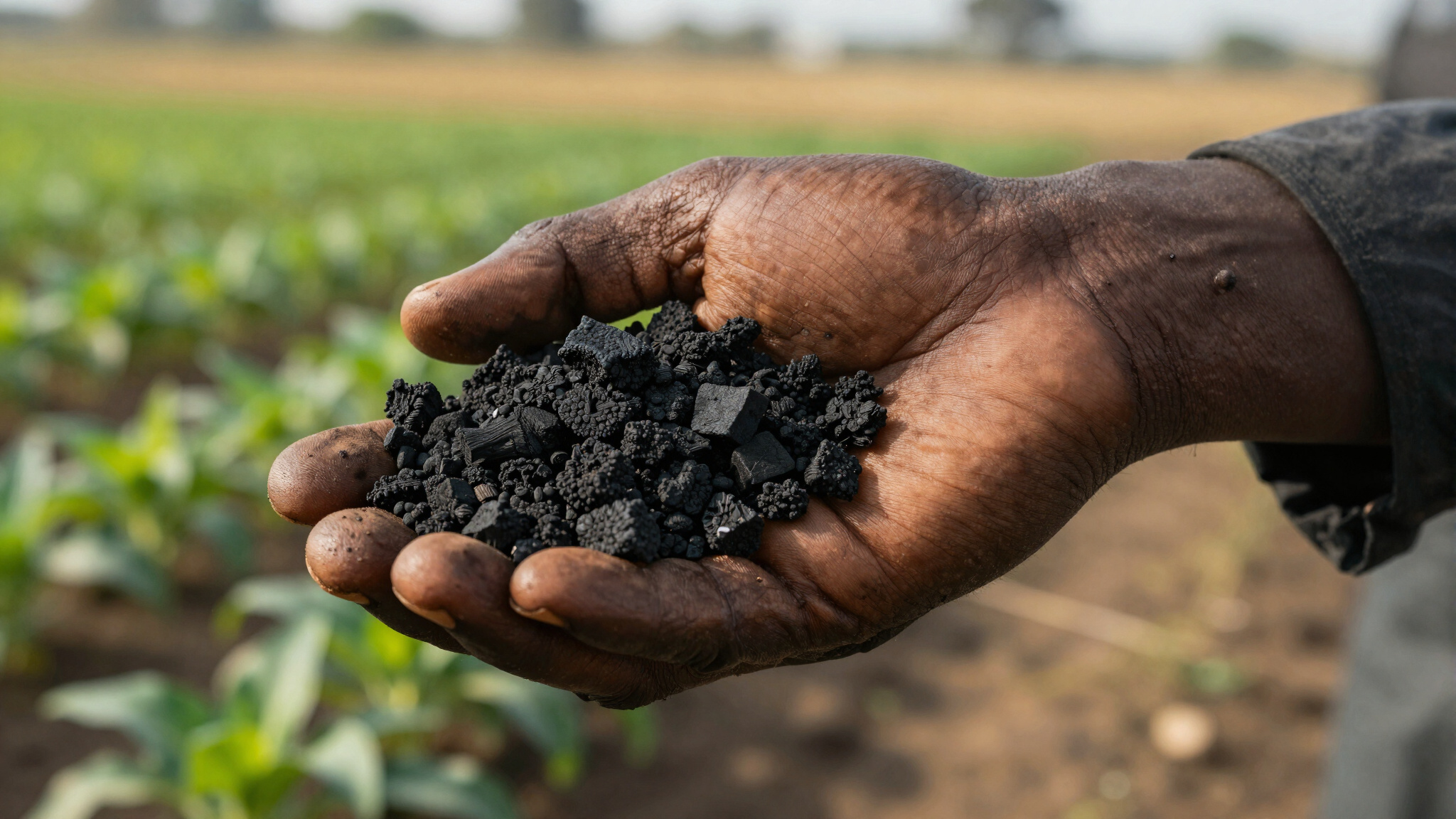
High calorific value liquid condensed from pyrolysis gases, serving as clean renewable process fuel.
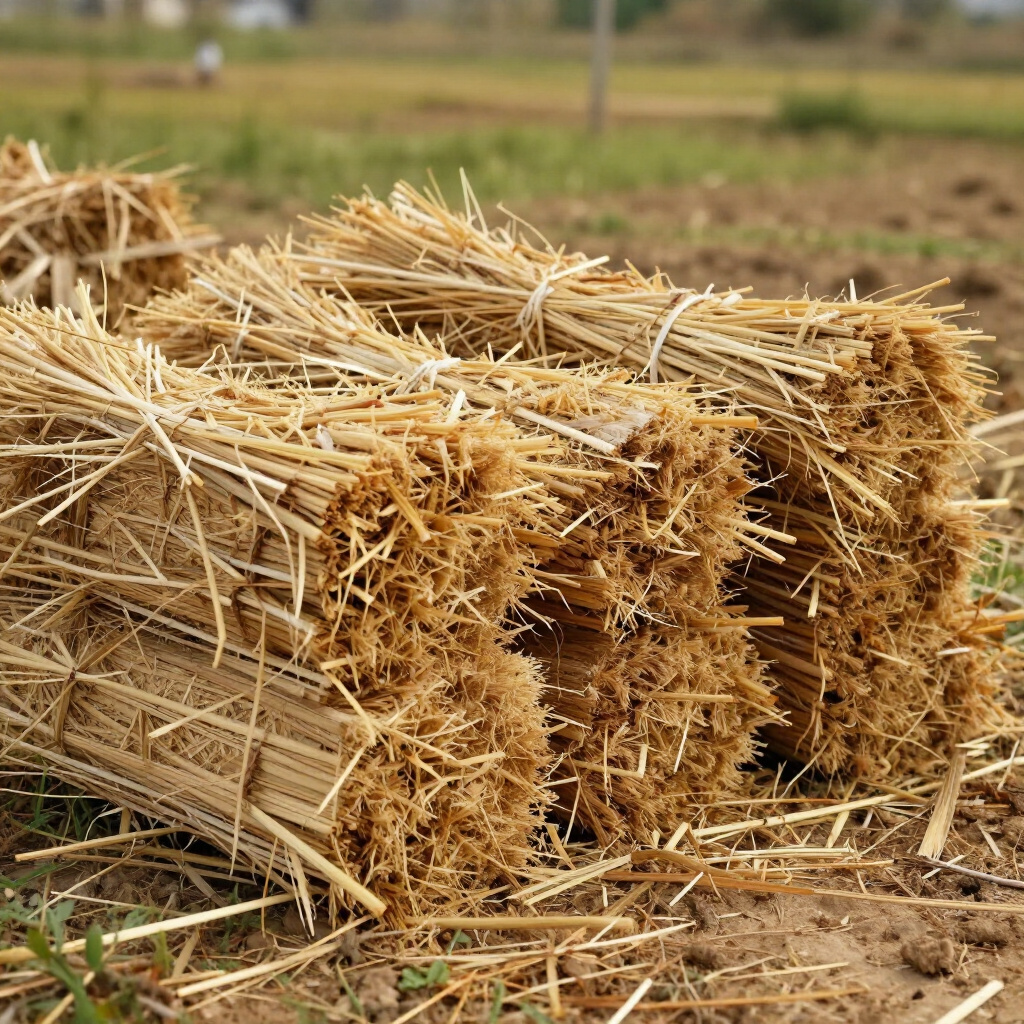
Pyroligneous acid fraction recovered during condensation, containing active growth elements for plants.
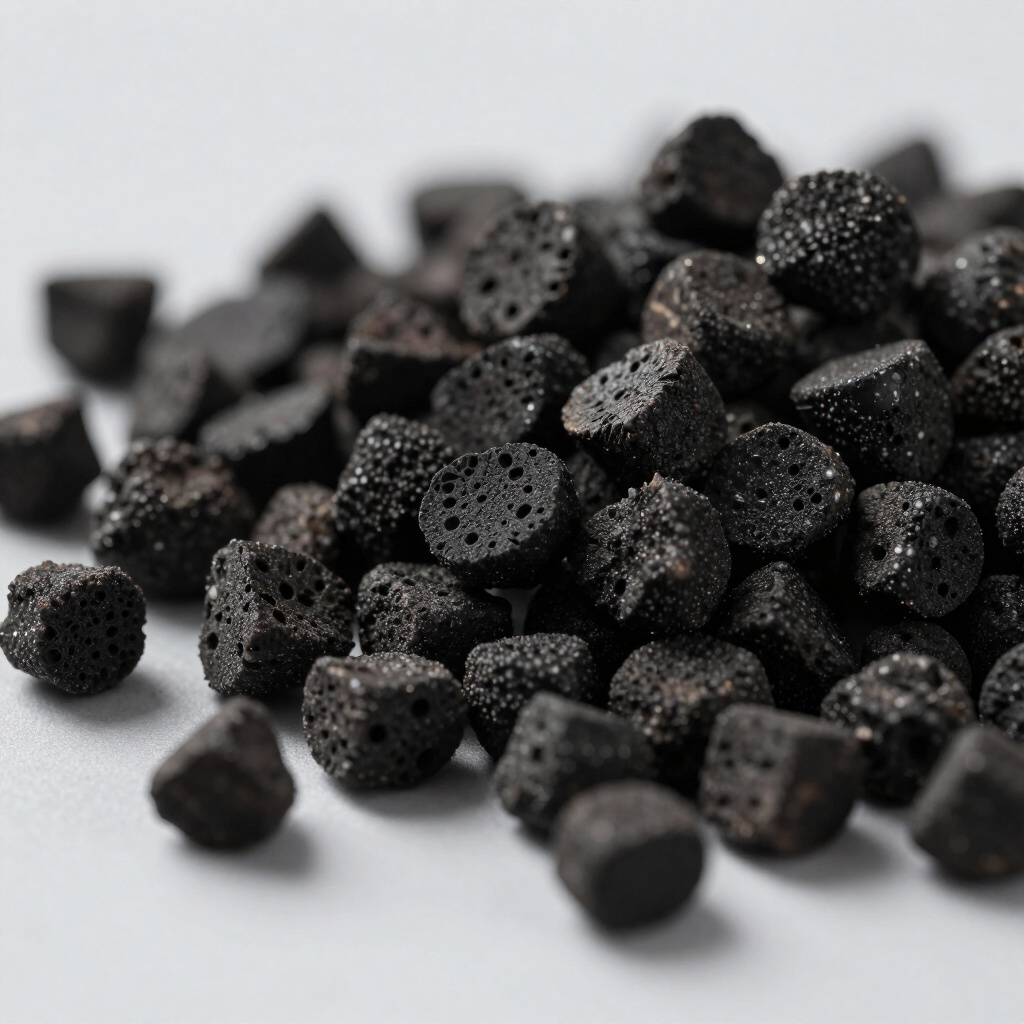
Highly porous carbon-dense matrix that locks carbon dioxide in agriculture soils permanently.
Terra handles everything. From crop residue mapping to final product validation and carbon credits generation, we build and manage the entire infrastructure.
Biomass feedstock residue mapping, regional site selection surveys, and techno-economic plant modeling.
Custom pyrolysis reactor design, logistics procurement, component integration, and system assembly setup.
Handling local, state, and pollution control board approvals, compliance registrations, and legal framework setup.
Operational start-up execution, process stabilization by feedstock density, and local operator workflow training.
Upgrading raw bio-oil into road binder, and physical testing to match national road-research standards.
Routine operations support, equipment maintenance audits, biochar carbon credit MRV tracking, and offtake linkages.
An experienced clean-tech developer supporting project developers, road builders, and agricultural networks from blank field to profitable biorefinery.
We represent a single point of responsibility. No need to manage separate equipment suppliers, registration agents, or product testing labs.
Our reactors are custom configured to handle challenging feedstocks like mustard stalks and paddy straw with minimal maintenance downtime.
Our decentralized layouts minimize transportation emissions, ensuring crop residues stay near feed zones to enrich regional soil carbon.
Profitability is de-risked. Earn from bio-bitumen binder, bio-oil fuel sales, wood vinegar bio-stimulants, and biochar sales.
Our Digital MRV provides automated telemetry, easing registration on carbon registries to secure secondary offset revenue streams.
Engineers, agronomists, and carbon specialists provide lifetime support, backing plants with continuous maintenance coverage.
Bridging agricultural field waste with high-grade commercial construction and farming inputs.
Replacing standard petroleum VG-30/VG-40 bitumen binders in expressway base courses for improved temperature fatigue.
Assisting government and private contractors in meeting mandatory eco-friendly sustainable material requirements.
Providing heavy pyrolysis bio-oils for steel mills, cement kilns, and boilers, displacing coal and heavy fuel oil.
Using wood vinegar stimulators to boost organic farming and utilizing biochar to restore nutrient absorption in topsoil.
Transforming agricultural stubble into clean value, eliminating winter field fires across northern Indian states.
Providing multi-national companies with high-permanence, registry-aligned biochar carbon credits for net-zero ESG targets.
Partner with Terra Climate Tech to construct high-yield, local feedstock biorefinery projects, replacing imports with sustainable circular infrastructure.
Find answers to key technical questions about our bio-bitumen characteristics and plant setup parameters.
Bio-bitumen (or bio-asphalt) is a renewable binder synthesized by upgrading organic bio-oils recovered through agricultural residue pyrolysis (~400-600°C in an oxygen-free reactor). This binder behaves dynamically like petroleum-derived bitumen and can be used as a modifier or partial replacement in road asphalt mixes.
Yes, the category is verified. India's premier road-research organization, CSIR-Central Road Research Institute (CRRI), along with the CSIR-Indian Institute of Petroleum (IIP), successfully laid a trial section of bio-bitumen hot-mix asphalt on 26 October 2024 along the Jorabat-Shillong Expressway (NH-6), validating performance under actual heavy highway traffic.
Bio-binder typically acts as a partial replacement or modifier, substituting commonly 20% to 30% of conventional VG-grade petroleum bitumen in standard hot-mix configurations, without requiring alterations to existing industrial hot-mix machinery.
By shifting agricultural residues from open-field stubble burning into Pyrolysis, we prevent toxic particulate air pollution. The resulting road asphalt blocks carbon in durable pavements, reducing overall greenhouse gas footprints by up to 70% compared to pure petroleum asphalt extraction.
Terra is a full project implementation partner. We conduct feedstock residue mappings, design and install pyrolysis reactors, support government licensing and pollution clearance approvals, configure quality-control labs, and connect operators to verified carbon credit registries for secondary offset monetization.
Discuss setting up a biorefinery plant or procuring sustainable road binders.
We seek collaboration with highway developers, government agencies, municipal contractors, and agricultural residue collection organizations. Contact us to schedule a presentation.
620 Vaibhav Tower, Amrapali Circle, Vaishali Nagar, Jaipur, Rajasthan – 302021, India